Course Syllabus
I. Andante
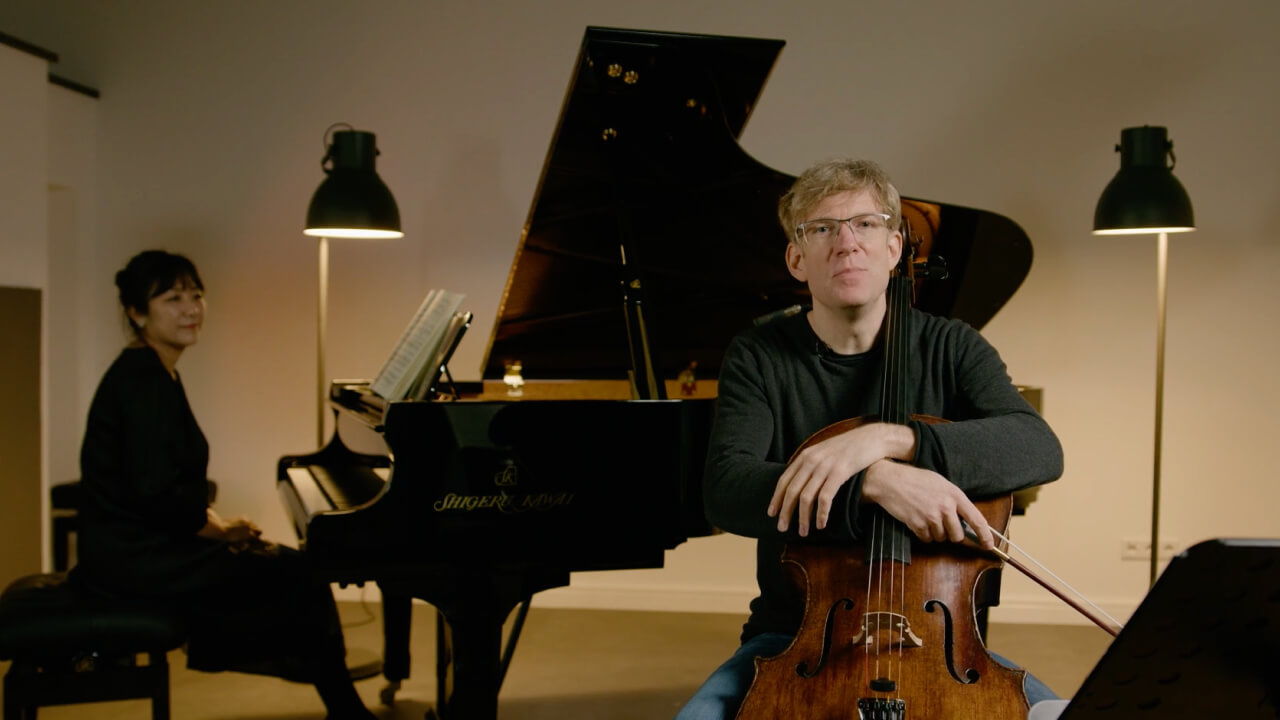
In this lesson, Johannes Moser, joined by Fan Yang on piano, takes us through the sweeping Andante of this sonata. We look at many different aspects of interpretation such as what tempo to take and what andante really means. We also look at specific aspects of vibrato and how to plan and pace our left hand motions.
—Allegro vivace
In this lesson, we learn about the importance of keeping the rhythmic feel in two and not in four. We also learn about the incision of the famous dotted rhythms. Moser shows us special bowing techniques to gain the power we need for this intense movement.
II. Adagio
In this lesson, we learn about the the various characters of this moving work. Moser places a special emphasis on interpreting the markings from Beethoven, such as teneramente, that are important for the character. We also learn about Moser's "three dimensional approach" to colors and score layerings.
—Allegro vivace
In this lesson, we learn how to create the fleeting, joyful character of this music. Moser also gives us a bit of a history lesson as we look at Beethoven's development and how he had a deep love for old music and how this informed Beethoven's passion for fugues.
I. Andante (Cello alone)
In this lesson, Johannes Moser shows us ways of avoiding unwanted audible shifts so we have the purest sound possible. We also learn practical tips for switching from Arco to pizzicato to make the most of the attack marking.
—Allegro vivace (Cello alone)
In this lesson, we learn about the importance of being absolutely clear to match the articulation of the piano. We also learn about bow distribution so we can make strong sforzandi on the up bow.
II. Adagio (Cello alone)
In this lesson, we learn get as close to the piano sound as we can. This means we must practice extensions and reaching with our left hand so we avoid shifting when possible.
—Allegro vivace (Cello alone)
this lesson, we dive deep into the technical challenges of the upper register of the cello. We also learn how to modulate the vibrato to support the piano and not always dominate the sound world. Moser places a special emphasis on what he calls the "radical dynamic changes" of Beethoven.
Click here to download the course workbook PDF and see the full syllabus →